
A homebuyer waits for the keys.
The money is ready, but it cannot move until legal conditions are satisfied. Normally, documents, lawyers and banks take turns.
Britain’s largest banks tested something different. Lloyds, NatWest and Barclays used tokenised bank deposits in two remortgage transactions, while another group including HSBC simulated an online purchase. Funds could be locked and released automatically when agreed conditions were met. Reuters
Crypto spent years asking whether money needed banks. Banks are now asking whether bank money should behave more like crypto.
The next contest may not be old money versus new money. It may be between digital versions of familiar money competing to become invisible.

The Bank Deposit Learned a New Trick
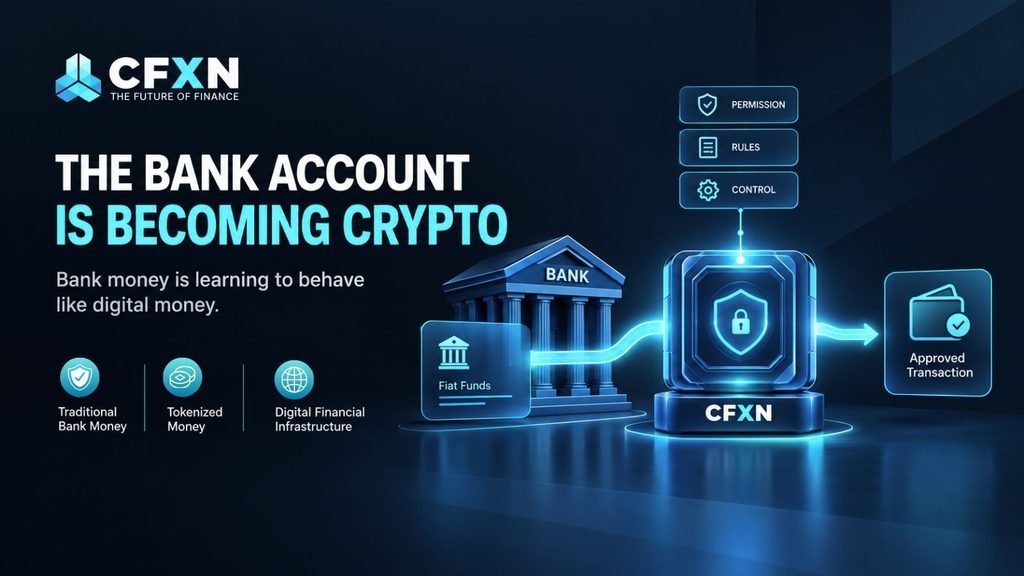
It remains a claim on a commercial bank, with the legal characteristics of an ordinary deposit, but it can move on programmable infrastructure. In the British pilot, the point was not creating a speculative asset. It was making existing bank money capable of doing things that normally require separate processes. Reuters
Money could wait for proof that goods arrived before paying a seller. Property funds could remain locked until a transaction completed. Business payments could carry conditions without somebody manually checking every step.
For years, digital finance improved transportation. Now it is changing what money can do while it waits.
Stablecoins Suddenly Have Company
Stablecoins helped prove that digital value could move around the clock without asking whether a bank branch was open.
The Bank for International Settlements argues that stablecoins face questions around singleness, interoperability and financial integrity, while tokenised deposits may fit the existing monetary system more naturally. Bank for International Settlements
That does not make stablecoins obsolete. It makes the market crowded.
A future wallet may contain ordinary bank balances, stablecoins, tokenised deposits, reward tokens and perhaps central bank money, all serving different jobs.
Consumers will want to know one thing: can I use my money?

Central Banks Are Entering the Room
The Eurosystem launched Pontes, allowing tokenised asset transactions to settle in central bank money. The European Central Bank says the system will expand gradually, with broader functionality and longer operating hours planned over time. European Central Bank
Serious institutions care enormously about what sits underneath a transaction. A clever token is useful. A credible settlement asset is foundational.
As tokenised finance moves into mortgages and securities, institutions have less tolerance for ambiguity about who owes what.
As the revolution gets bigger, the technology gets stranger and the demand for trust gets more traditional.
The Interesting Product May Be the Translator
CFXN publicly describes one account combining crypto and fiat wallets, exchange functionality, Crypto Pay and transfers. Its site says Members will be able to hold digital assets and fiat side by side and convert between them. CFXN
The opportunity is not predicting which form wins. It is avoiding the need for customers to care.
Imagine a freelancer paid in a stablecoin, a merchant wanting local currency and a bank using tokenised deposits behind the scenes.
The user wants one financial life and one balance they understand.
That shifts a financial platform from storing money toward translating between monetary worlds.

Complexity Is Moving Backstage
Swift is also experimenting with a blockchain based ledger for tokenised deposits. ACI Worldwide says seventeen banks across six continents are involved in pilot use cases designed to move such money across institutions and beyond traditional operating hours. ACI Worldwide
The future is becoming more complicated underneath and simpler on top.
Nobody opening a web page wants to understand routing tables. Nobody sending a photo wants a seminar on compression.
The infrastructure may contain banks, stablecoins, tokenised deposits, card networks, blockchains and compliance systems.
The customer taps one button.
If that abstraction works, the product feels effortless. If it fails, the customer discovers the machinery all at once.
Trust Will Be Measured in Boring Moments
Financial companies signal trust with branding and partners. Users judge it differently.
Did the payment arrive? Was the exchange rate clear? Could support explain what happened? Did the recipient receive the expected amount? Could the customer use the balance afterward?
Those moments become stories. Stories become reputation. Reputation becomes adoption.
When several forms of money sit behind one interface, customers cannot inspect every settlement layer. They outsource judgment to the platform.
A friend saying, “I use it every week and it works,” can matter more than technical claims.

Simplicity Can Hide Risk
When customers no longer see which money is being used, platforms take more responsibility for explaining custody, conversion, fees, redemption and failure.
The UK Financial Conduct Authority is opening applications for its coming crypto regime, covering activities including stablecoin issuance, trading platforms and safeguarding cryptoassets. The broader regime is scheduled to take effect later. FCA
For investors, elegant experience cannot replace operational competence. For future Members, simplicity should not mean mystery.
The best financial products will hide complexity while making important risks unusually clear.
The Winner Might Not Be a Currency
For years, the industry asked which digital money would win: Bitcoin, stablecoins, central bank digital currencies or tokenised bank deposits. That may be the wrong question.
Email became useful when people could communicate without caring which infrastructure handled the message.
Different forms can coexist if platforms make them understandable, transferable and useful.
That is the more interesting test for CFXN: not whether it can persuade Members to love a particular instrument, but whether it can make the boundaries between instruments matter less without making risks harder to see.

Follow the Abstraction
The surprising development is that blockchain is beginning to disappear inside banking.
That is what happens when technology starts growing up. The novelty retreats. The useful behavior remains.
Investors watching CFXN should look beyond crypto features and ask harder questions about conversion, liquidity, custody and regulatory readiness.
Future Members should watch whether moving between forms of value feels understandable rather than experimental.
CFXN is still building, and its public claims should be judged against the services, terms and jurisdictions actually available at launch. CFXN
Explore the CFXN Network, follow its development and judge the experience by what it makes easier, not by how futuristic the plumbing sounds.
Because the most important financial innovation may be the moment you stop noticing which kind of money you are using.